
Bombay HC: Single Mothers Can Decide Child's Surname & Caste
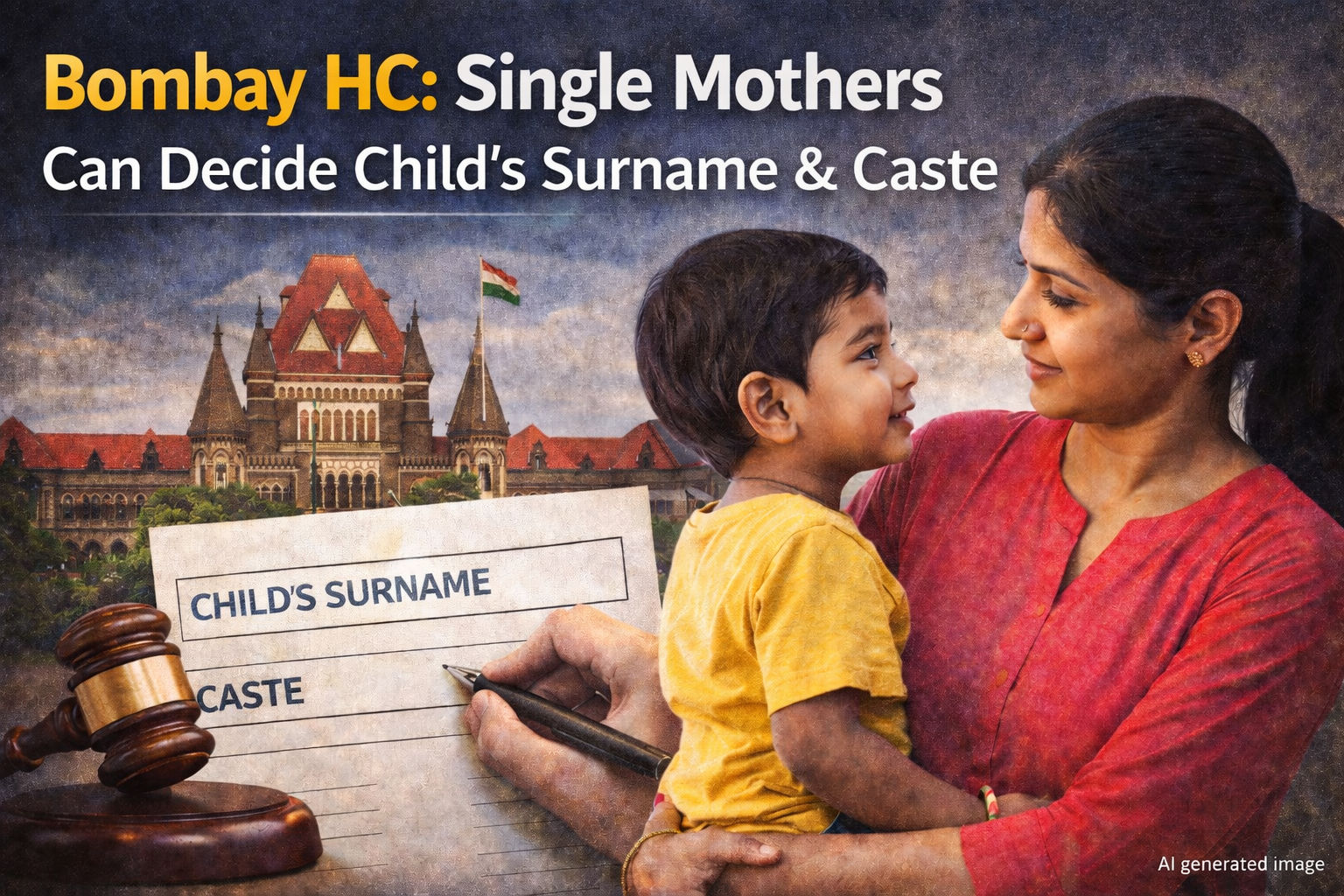
In a landmark observation, the Bombay High Court, presided over by Justices Vibha Kankanwadi and Hiten S. Venegavkar, established that a child cannot be "forcibly tethered" to the name or identity of an absent father. The court emphasized that in a modern society, administrative rules must reflect the social reality of a single mother’s role as the "complete parent."
I. Supreme Court Precedent: Akella Lalitha vs. Sri Konda Hanumantha Rao (2022)
The Bombay High Court’s observations align with the spirit of the 2022 Supreme Court ruling in Akella Lalitha vs. Sri Konda Hanumantha Rao. In this case, the Apex Court held that:
The mother, as the natural guardian, has the primary right to decide the child’s surname.
This right includes the authority to give the child her own surname, her maiden name, or even the surname of a stepfather in the event of remarriage.
The child’s welfare is the "paramount consideration," and the name should not be a cause of social stigma or discomfort.
II. Key Legal Principles Established
Natural Guardianship: When a mother bears the entire burden of a child’s upbringing, she possesses the sole legal authority to define the child’s public identity.
Administrative Flexibility: Schools and government departments cannot reject applications for name or caste changes simply because they do not follow "traditional" patriarchal formats.
Caste Identity: The court ruled that caste is determined by the social environment and upbringing rather than just biological lineage. If a child is raised in the mother’s social circle, they are entitled to the mother's caste certificate.
Conclusion
The combined force of the Supreme Court’s ruling in Akella Lalitha and the observations by Justices Vibha Kankanwadi and Hiten S. Venegavkar ensures that a single mother's decision regarding her child's name, surname, and caste is legally binding. Any administrative refusal to update records based on these grounds is a violation of the mother's constitutional rights and the child's best interests.
Comments 0